We are six women from across SWANA who came together to write, each in her own voice, on the same question: why do we write? Our answers differ, but they meet in one place: the words are what remain.
Ma’am begins where the fear lives: in the space between speaking and staying silent.
“And when we speak, we are afraid our words will not be heard nor welcomed but when we are silent, we are still afraid
So it is better to speak remembering
we were never meant to survive.” Audre Lorde
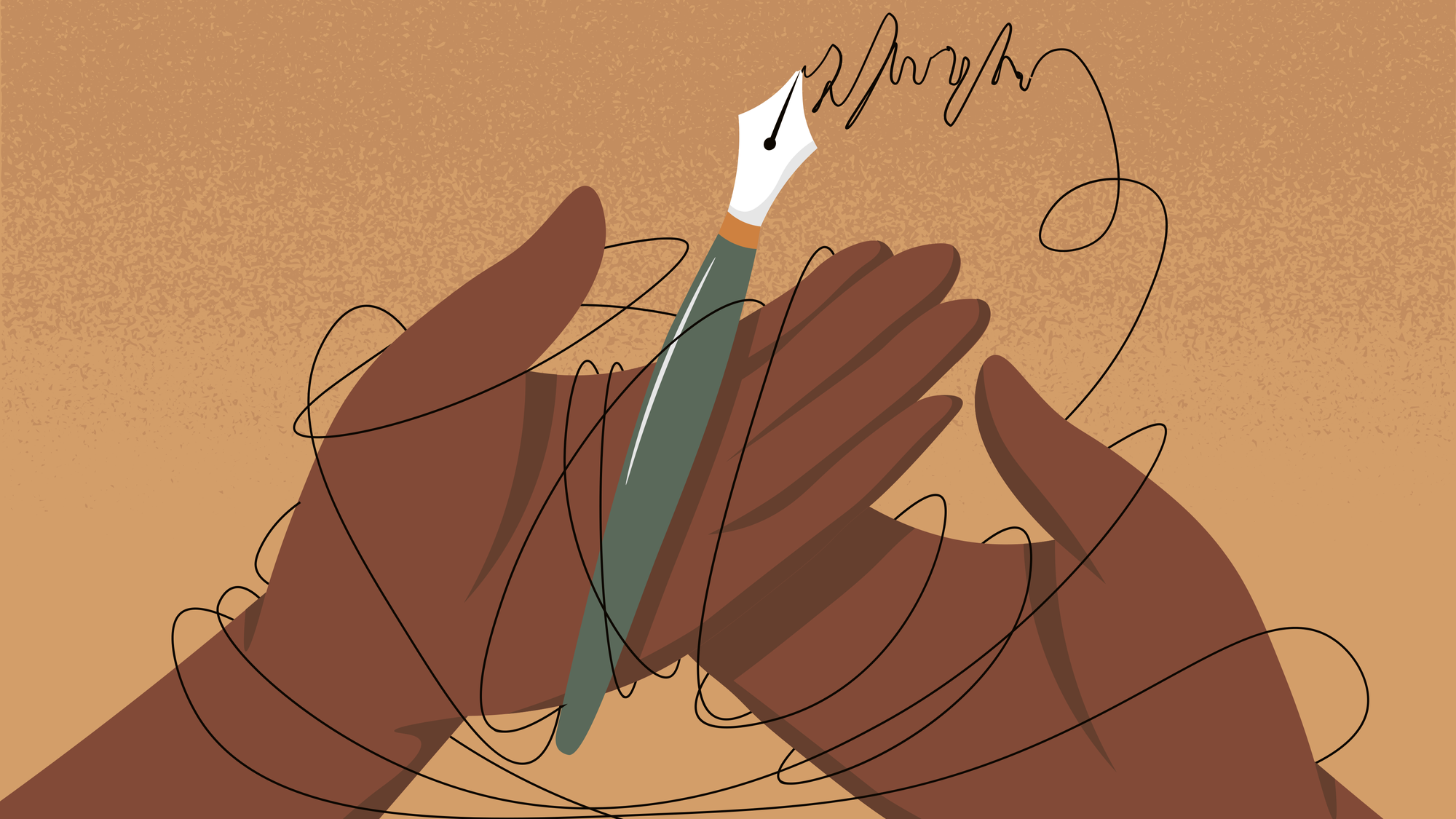
There is something profound about writing when you know it is all that remains. When writing becomes a means of survival. A life raft. The only thing keeping us alive.
There is something urgent in the act of writing. Writing because there is nothing else one can do. To mend oneself. To heal. To speak of oneself. To speak of others. To echo humanity. To make humanity speak.
There is something despairing in the act of writing. When you know your words count only for yourself. That they are not enough to stop the bullets. That they are not enough. That they resonate only for yourself. That they are not enough to promise tomorrow.
So, I write. Because, sometimes words are all that’s left.
There is something powerful in the act of setting down words. The awareness of their immensity. Their weight. Their force. Their tyranny. Knowing there will always be words. That we can never exhaust them. That we can never be deprived of them. That even when silence tries to swallow us, words remain. And even if they resonate for no one, they are there. They resonate for us. They are both masters and servants at once. They speak to us. They test us. They hear us. They make us speak.
So, I write. Because sometimes, that is all that matters.
I write to speak to myself. I write out of a duty of memory. I write because it is only through words that I can say certain things. I write because only words articulate reality. I write sometimes because words allow me to tame reality.
Because sometimes, setting down words is an act of resistance.
Even when silence rumbles, one must say one’s words. One must dare to bring them out, not lock them away, dare to shout them. Because sometimes, that is the only shield of humanity left to us. To write is to refuse the narratives imposed on us. It is the only way to impose our own narratives, our visions of the world, when others are forced upon us. Writing is a subversive act; it goes against what is expected of us, silence.
So, I write. Perhaps they are only words. But sometimes, that is all I have left.
Tasabih continues from here, and finds her way back to her sisters.
Why do we write? Why should I ever speak…I asked myself this question, while journaling for the first time after God knows when, and this when it hit me that, I didn’t just stop writing but I also stopped living, I stopped being who I am and what my cause was. All the hidden anger I had for the system that has and consistently betrayed us came back to the surface again, alongside with my sisters’ resilience, their words, their sacrifices, their beauty and the beating sounds of their brave heart kept echoing, through my ears again. And this is when I realized that the sorties we write have always gone beyond ourselves and beyond time. I always wanted to be free but my biggest desire is to create a world that is full of freedom for everyone, hence we should never drop our pen or mic.
Maab writes about refusing to shrink: about dancing, loving, and speaking on her own terms.
I wanted to write something even though I am not sure what to write but I’m very thankful that I have a voice and a place where I’m heard.
I wanted to say something to myself and to every woman that can relate. I know life can suffocate and be unfair to you, being judged for the simple fact of wanting to live differently, wanting to speak our mind, wanting to dance, to love, to live without the shackles of other human beings, others that are different and difficult. We will live, love, dance and speak. We have a free will that is meant to be used.
Weaam writes backward through time, to the girl she once was.
To whom am I writing? Perhaps to that little girl, to that little soul who knew fear before she knew how to name it, to the girl who experienced things no child should ever have to understand.
I am writing to you from the future.
As I have always done, I write my words to myself and scatter them among my books. I put down every heavy thought, every burden that I carry, and leave it there on the page. Holding a pen over a blank sheet of paper may seem like such an easy thing, something anyone can do. But trying to gather all that chaos, all those experiences, and fit them into a few words is not easy at all. It is tiring in its own way, but somehow, it is worth it.
There is something about writing down what is going on inside us, about giving our painful experiences a name, that makes us feel that we have won a small battle against them.
Writing does not erase what happened, but perhaps it helps us carry it. Perhaps it helps us find our way back to our feet.
I am writing to you to tell you that, before anything else, you are a woman. A woman whom some may look at and think is weak, someone who cannot face what life puts in front of her. But you are not that woman.
The strength inside you was planted by God. And every arrow you have endured, every time you kept going despite what hurt you, is proof of that strength.
So do not let anything stand in your way. Say what you need to say, with a voice that cannot be silenced and a pen that refuses to surrender. And remember that you will always be you-beautiful, strong, and a fighter.
Burcu writes about finding her own voice again.
There was a belief in my mind: I should be perfect. If I don’t, anybody loves me so much.
In time, writing became a huge part of my job. It fed this feeling directly. I should be a perfect writer, especially in my mother language, I should use all the words or punctuation in the right way.
I was so afraid of being wrong, I worried so much. But I couldn’t change my way of thinking or (worse) feeling.
I started to correct my writings (myself) with AI. When I saw the exact correct forms of my words, my sentences, I felt sudden relief. But when I looked at these sentences, I also knew something was wrong.
After encountering a lot of great feminist writers, I couldn’t believe patriarchal voices of society can still leak to my mind and body through writing, in this way. But I realized, and realized again. I attempt to find my own voice, again. Grab my mistakes, enjoy my words.
And I know my sisters, comrades are here. Also grabbing my mistakes, my words, my voice, myself. Thank you.
Dilan writes about how writing makes everyday resistance visible.
Writing is a powerful way of being seen. We write because women’s everyday resistance so often goes unrecorded. The struggle against the patriarchy that stands in the way of our freedom happens not only in the streets, but at home, at work, in a glance, in how we stand. We write to make that visible. Every word we set on the page frees us a little more.
Let us honor the strength we find in each other, and let us keep writing. For Woman, Life, Freedom.
—
Six voices, one text. What holds them together is this: writing lightens the weight of what cannot yet be said aloud. It keeps us close to each other, even across distance, even across borders. Every word set down here is a small refusal to disappear.
So we ask you, too: write. Write what you are not allowed to say. Write what you are afraid will not be heard. Write even if it is only for yourself, even if it feels like no one is listening, because the words are what remain.