
“All my life, I was always a trouble in men’s world because I was woman. Now, I’m a trouble in women’s world as well because I’m a 65-year-old woman.” (Barbara Macdonald)[i]
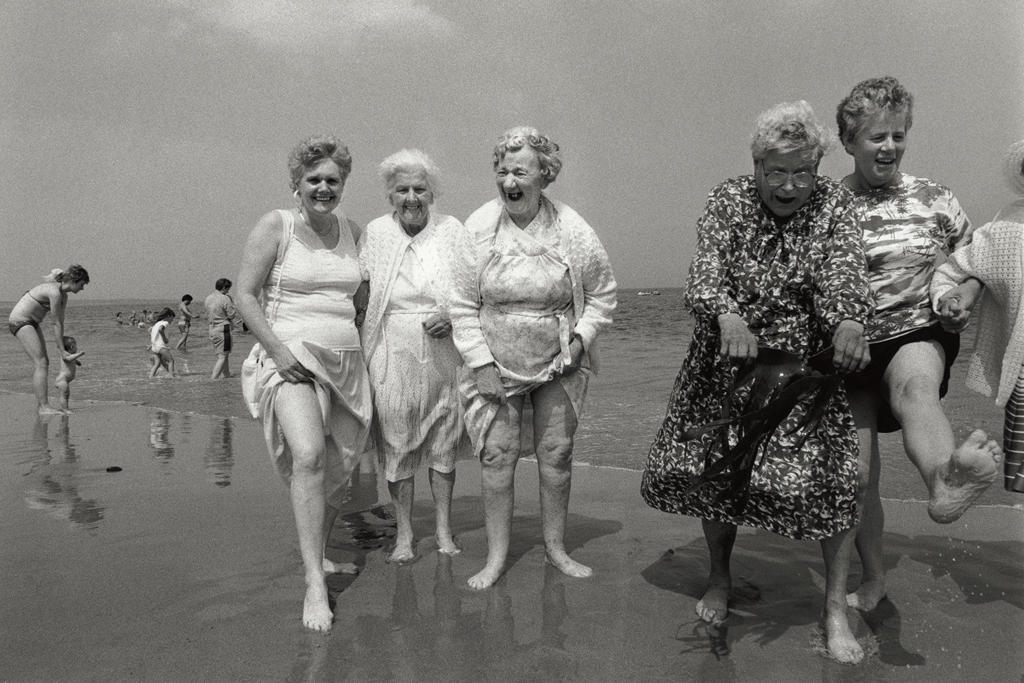
As aging has become a global issue that is palpably felt, old age has increasingly entered public conversations in Turkey and elsewhere. Feminists in Turkey, too, have begun to speak about aging as they themselves grow older.[ii] Despite the fact that we are all aging with each passing second, old age has long been treated as a topic to be avoided—something not to be touched upon or addressed unless experienced directly, as if one must first be old in order to speak about it.
Age relations constitute a system of inequality based on age—a system that privileges those who are not old at the expense of older individuals.[iii] Drawing on the concept of age relations, Calasanti approaches old age in a three-dimensional framework: first, as a regulatory principle that structures society; second, as a dynamic through which different age groups acquire power and identity in relation to one another; and third, through its intersection with other systems of inequality.[iv] Within these age relations, adultism refers to the oppression of children and youth, as well as the prejudice and systemic discrimination they face in an adult-centered social order. Ageism, on the other hand, encompasses the discrimination directed at older adults in everyday life, the denial of old age and the aging process, and institutional practices and policies that perpetuate stereotypes and biases about older people.[v] Feminist theory and activism tend to tackle race, gender and class intersectionally, and often disregard age as a foundational category. These inequalities felt throughout one’s life exacerbate as one gets older. On top of that, age itself is a source of inequality that shapes every aspect of a person’s life. A feminist struggle that brushes age relations and aging under the rug contributes to the perpetuation of the oppression of old people who are socially located at the intersection of multiple axes of inequality. Feminist researchers and theoreticians are criticized for not seeing old age as a component of feminist theory. The disregard for women who can no longer bear children and the absence of policies addressing their needs, are seen as products of male-dominated thinking.[vi] Macdonald, in a speech where she talks about old aged women getting organized poses the following question: “Has it never occurred to younger women activists as you organize around “women’s” issues that old women are raped, that old women are battered, that old women are poor, that old women perform unpaid work in the home and out of the home, that old women are exposed to violence?”[vii]
In the book Yaşını Gösteren Kadınlar: Yaşlanmanın Feminist Deneyimi (Women Who Show Their Age: The Feminist Experience of Aging), we turn our attention to women whose knowledge and experience are increasingly dismissed as they grow older—standing in contrast to men, who are often valorized with age. As Necla aptly puts it, while women feel “freer, more experienced, and capable of doing anything,” they also recount the ageism they face. Gülseren was 39 years old when a young woman told her, “You’re old—I should be the one joining the party’s central committee.” Beril recalls how her presence as an older woman at an abortion protest drew attention. Meanwhile, Evren shares how the insights she offers, drawn from her experiences as an older woman, are often perceived by younger women as an attempt to assert experience hierarchy. She notes that she avoids participating in feminist organizations for fear of being labeled a boomer.
Aging Woman’s Body
Graying hair that must be dyed, wrinkles, slowed movements, increasing forgetfulness… The oscillation between resistance and acceptance of the limitations brought by the aging body—along with feelings of hurt, anger, and sorrow—are among the experiences of aging/older women. These are experiences that the eternally youthful feminist struggle overlooks, unable or unwilling to acknowledge or address them. Streets and spaces that remain forever young and cannot be made age-friendly; street protests designed for the young, full of sudden runs, stops, sitting and standing; being unable to join demonstrations due to physical limitations that make it impossible to flee from the police; and the dwindling opportunities for gathering as partying no longer feels appealing—these are all part of the experience. What these experiences clearly reveal is that opportunities for older women—or those growing older—to come together and struggle alongside younger women or their peers are quite limited.
Issues like contraception, abortion, and the sexual health of young women are brought to the forefront, but due to ageism experiences such as menopause remain largely invisible. Actually menopause is treated almost like a taboo. What women know and experience about menopause finds space only through medicalization; little attention is given to what women subjectively go through during menopause. Menopause is often seen as the end of sexuality, a turning point where women’s desires are denied, and they are rendered genderless for being neither women nor men. Women are surprised that they can still feel desire or love. Older people are often desexualized and disconnected from their sexuality, which makes them invisible in this context, but older women, too, can be subjected to sexual violence.[viii]
Women are old and they are expected to die of natural causes
In Turkey, women live on average 5.5 years longer than men. Women make up 49.9% of the population aged 45–59 and 70.2% of the elderly population[ix]. For many elderly women, old age is compounded by poverty, leaving them vulnerable to neglect and abuse. When poverty intersects with elder neglect and abuse, the risk of death escalate sharply. Older adults, most of them women, lose their lives to preventable causes such as house fires, carbon monoxide poisoning, and hypothermia. As of December 2023, 55% of elder neglect and abuse cases end in death[x]. Other recorded causes include falls, workplace accidents, and homicide. Yet the question of how elderly women die—or are killed—remains largely invisible. We do not know, and we do not track it.
Family as the support system and network of set-backs that women fall back on as they get older
As we age and become increasingly isolated, our families—which we criticize and sometimes reject—often remain our first source of material and emotional support. That said, in Turkey, when asked about their primary source of happiness, the majority of people cite their families (69.9%), followed by their children (15%), themselves (5.4%), their spouse (3.8%), their mother or father (2.9%), and their grandchildren (1.8%).[xi]
Women, whether aging with or without children, report that when they need care—or when mandatory and/or voluntary care work is required—they return to their families.[xii] Within this caregiving environment, they maintain social relationships and receive support in providing care, while also securing the care they themselves will need in old age.[xiii] Across generations—young, middle-aged, and elderly—women are expected to care for both children and older relatives. Elderly women, in particular, are judged harshly when they refuse to care for their grandchildren. Invisible elderly women often become visible only when their care labor can be purchased cheaply through initiatives such as the “Grandmother Project.”[xiv] Over the years, as Turkey’s population has aged, the child dependency ratio has steadily declined (31.4% in 2023), while the elderly dependency ratio has increased (15% in 2023). While childcare is rarely considered a burden, caring for the elderly is often perceived as one. As we age, we must create conditions in which we can care for each other outside of the family. We must push for social policies that prioritize individual well-being over family-oriented, conservative policies on aging.
What are we going to do?
Dreams, both near and distant, small and grand; conversations about our age—asking one another how we are experiencing it, what it brings us, what it takes away from us—and, of course, listening to each other. Increasing age diversity within the feminist movement, creating opportunities to reflect together on our actions and gatherings. Considering different ways of living together in response to the anxiety and fear of the loneliness that can accompany old age: intergenerational roommate arrangements, cooperatives, shared housing, and more.[xv] Feminist communes, villages, care homes… Expanding the number of accessible spaces for women of all ages to discuss aging, such as the menopause cafes established in England.[xvi]
Instead of ignoring or dismissing aging, we should embrace it; instead of getting older, we should age. The expression “getting older,” which has become ingrained in our language, is, in my opinion, a manifestation of ageism that denies our aging and interrupts the continuity of aging. Ultimately, age is not something we acquire year by year from the outside; it is a time we are fully immersed in. As this time increases, we do not become the descendants of the witches who were burned, but the old witches themselves.
The neglect of age relations in both theory and practice, the prevalence of ageism, and age-based policies that regulate our lives prevent us from intervening in or contributing to these policies. When a woman can no longer give birth or participate in the workforce, it becomes essential to reflect on how life is lived and to fight for rights at every age. This means monitoring current social policies and regulations—such as proposals to raise the retirement age or alter compensation rights—and advocating for social policies that bring together people of different ages.
In lieu of a conclusion
In her text Space Crone[xvii], Le Guin writes that “it requires fanatical determination now to become a crone.” She continues, explaining that by saying old age is difficult and lonely, and is accompanied by thoughts of death, the old woman can serve as a successful representation of humanity—someone who has experienced, accepted, and lived through the entirety of the human condition, whose fundamental characteristic is change—and places her on the spaceship.
[i] Macdonald, B., & Rich, C. (2001). Look Me in the Eye: Old women, aging and ageism. Spinster Ink.
[ii] Üstün, H., Erbay, H., Ülker, G., Alıcıoğlu Cömert, D., Tümen, B. ve Demirdirek, A. (Haz.). (2024). Yaşını Gösteren Kadınlar, Yaşlanmanın Feminist Deneyimi. Ankara: Dipnot Yayınları.
[iii] Calasanti, T. (2003). Theorizing age relations. In S. Biggs, A. Lowenstein, and J. Hendricks (Eds.), The need for theory: Critical approaches to social gerontology, (pp. 199–218). Amityville, NY: Baywood.
[iv] Yanardağ Kocabaş, P. (2019). Feminist yaşlılık çalışmalarına bir bakış: kocakarılığı kucaklamak. Birikim Dergisi, 84-95.
[v] Butler, R. N. (1980). Ageism: A foreword. Journal of Social Issues, 36, 8–11. https://doi. org/10.1111/j.1540-4560.1980.tb02018.x
[vi] Marshall, L. (2006). Aging: A feminist issue. NWSA Journal, 18(1), vii-xiii.
[vii] Macdonald, B. (1989). Outside the sisterhood: Ageism in women’s studies. Women’s Studies Quarterly, 17,6-11.
[viii] https://t24.com.tr/haber/doktorum-diyerek-girdigi-evdeki-felcli-kadina-tecavuz-etti-yasli-kadin-15-gun-sonra-oldu,1150511
[ix] https://data.tuik.gov.tr/Bulten/Index?p=Istatistiklerle-Kadin-2023-53675
[x] https://api.senex.org.tr/Upload/Publication/ef283ab701684ec8892daef1cad921a9.pdf
[xi] https://data.tuik.gov.tr/Bulten/Index?p=Yasam-Memnuniyeti-Arastirmasi-2023-49692
[xii] Üstün, H., Erbay, H., Ülker, G., Alıcıoğlu Cömert, D., Tümen, B. ve Demirdirek, A. (Haz.). (2024). Yaşını Gösteren Kadınlar, Yaşlanmanın Feminist Deneyimi. Ankara: Dipnot Yayınları.
[xiii] Aydemir, A. (2021). Geçmişlerinin Gölgesinde Gelin Kayınvalidenin Bakım İlişkisi; Yaşlı İhmal ve İstismarı. Senex: Yaşlılık Çalışmaları Dergisi, 5(1), 4-18.
[xiv] https://www.aile.gov.tr/ksgm/haberler/buyukanne-projesi-nedir/#:~:text=Torunlar%C4%B1n%C4%B1n%20bak%C4%B1m%C4%B1n%C4%B1%20%C3%BCstelenen%20anneanne%20ve,toplam%206%20bin%20aileyi%20kapsayacak
[xv] Çeşitli örnek uygulamalar için bakabilirsiniz Ülker, Ş. Ş. (2019). Ortak yaşam mekanları ve dayanışma. Beyond İstanbul, 144-149.
[xvi] Yanardağ Kocabaş, P. (2019). Feminist yaşlılık çalışmalarına bir bakış: kocakarılığı kucaklamak. Birikim Dergisi, 84-95.
[xvii] Le Guin, U. K. (2022). Uzaylı Kocakarı. (s. 154-158) (D. Erksan, B. Somay ve M. Gürsoy Sökmen Haz. Kadınlar Rüyalar Ejderhalar (11. Basım). İstanbul: Metis Yayınları.